
Who Pipedrive is for
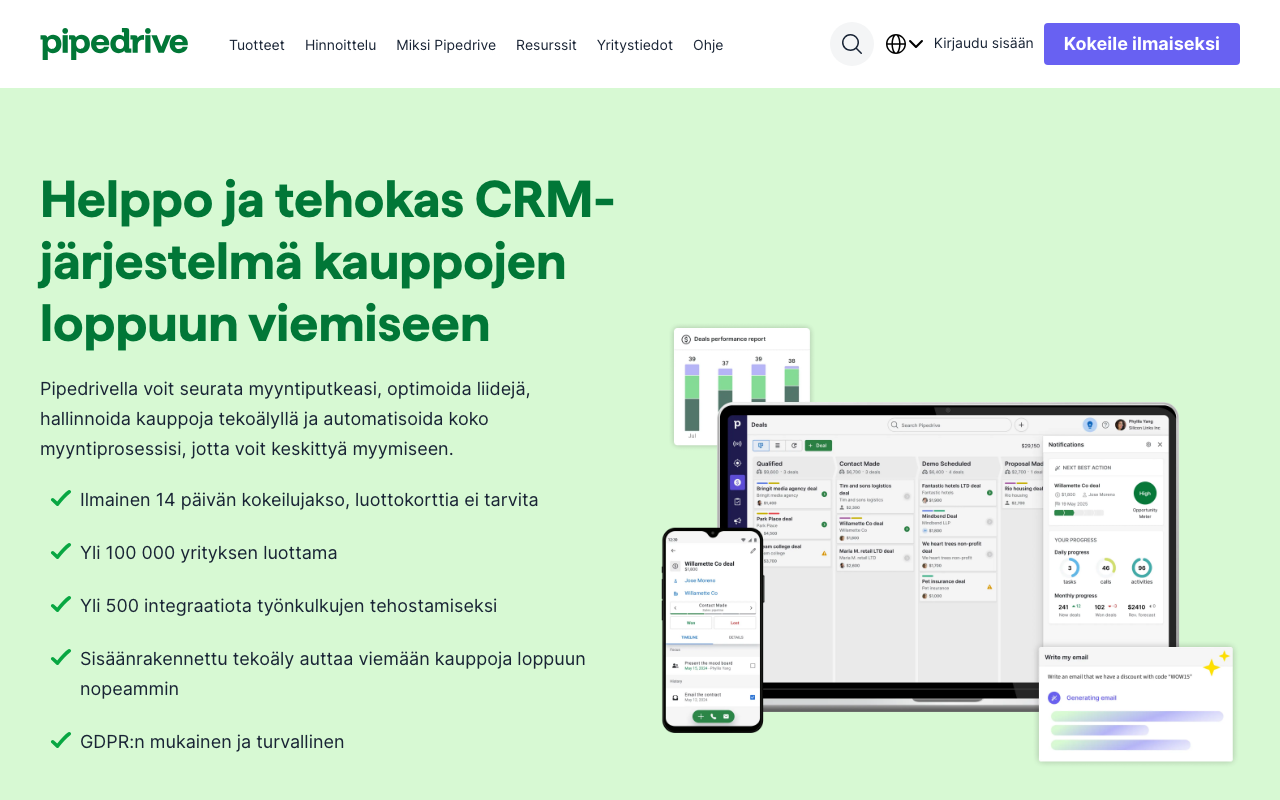
Pipedrive is for the small or mid-size sales team that wants reps to actually keep the CRM updated. It was built around one idea: a visual, drag-and-drop pipeline where every deal is a card you push from stage to stage. If your sales motion is "move deals through clear stages and chase the ones going stale," Pipedrive maps to how you already think, and adoption is fast. Founders, SMB sales managers, and AEs who have been burned by heavier systems tend to like it.
It is a weaker fit if you need deep reporting, complex object models, or enterprise governance. Teams that want custom objects, granular permissions, and forecasting dashboards that survive an audit will hit Pipedrive's ceiling and should look at HubSpot Sales Hub or a full Salesforce build. Pipedrive is deliberately simpler than those, and that simplicity is the point, not a flaw, for the buyer it targets.
A pipeline reps keep updated
The core of Pipedrive is the deal pipeline. You see every open deal as a card in a column, drag it forward when it advances, and the activity reminders nag you about the next step. That visual model is why Pipedrive scores well on adoption: there is very little to learn, and the daily workflow takes seconds, not a training session. Email sync, activity tracking, and a contacts timeline round out the basics.
On top of that, Pipedrive layers automation and AI as you climb the plans. Workflow automation triggers actions when a deal changes stage or a contact is created, so you can auto-assign owners, fire follow-up tasks, or send templated emails without manual clicks. The AI Sales Assistant watches your pipeline and surfaces what needs attention: deals that have gone quiet, overdue activities, and contacts you have not followed up with. Higher plans add AI email drafting, lead scoring, and natural-language reporting through its Insights AI. Pipedrive has shipped a steady stream of AI features since 2024, including call and meeting summaries, though most of it sits at assistant level, suggesting and drafting rather than acting on its own.
Pricing notes
Pipedrive runs four plans: Lite, Growth, Premium, and Ultimate, priced per seat per month billed annually at $14, $39, $59, and $79 respectively (verified directly on Pipedrive's pricing page, September 2026). Paying monthly costs meaningfully more, so commit annually if you can.
Lite covers basic deal and lead management with one-way email. Growth is where two-way email sync, workflow automation, sequences, and forecasting unlock. Premium adds lead scoring, AI email tools, e-signature contracts, and (worth noting) bundles LeadBooster-style lead generation and routing at no extra cost. Ultimate piles on account security rules, phone and email data enrichment, and the highest automation and custom-field limits. The honest caveat is add-ons: below Premium, things like lead generation tooling and advanced enrichment are not included, so the sticker price on Lite and Growth is not the real price once you need them. Tiers and numbers shift, so verify the current structure on Pipedrive's pricing page before you buy.
Practical AI: what your team can do with it
Pipedrive earns an 82 AI-stack-fit score from Revenue Directory, on par with the more agent-ready CRMs now that it ships a vendor-supported MCP server on top of an already-solid API.
The API side is strong. Pipedrive ships a well-documented REST API with webhooks, a 500-plus app marketplace, and broad coverage of deals, contacts, activities, and pipelines. That makes it easy to pipe data into the rest of your stack or wire it into Zapier and Make. Be aware Pipedrive moved to a token-based API rate limit, where your daily budget scales with plan tier and seat count, so heavy automation on the entry plan can run into ceilings.
On MCP, Pipedrive now ships an official, vendor-built server, documented at pipedrive.com/en/features/mcp-server as "built and maintained by Pipedrive" and following its own security standards. That lets an assistant like Claude search deals, update contacts, and move pipeline stages through natural tool calls, with usage metered by token limits tied to your plan (extra tokens are purchasable). It is a newer addition than the REST API, so expect the tool surface to keep expanding. Pipedrive's own in-product AI is still assistant-level, suggesting and drafting rather than acting on its own.
The verdict
Pipedrive is the friendliest pipeline CRM for small teams that want momentum, not administration. If your priority is getting reps to log activity and move deals without a multi-week rollout, few tools do it more cleanly, and the official MCP server plus REST API mean it fits a modern AI stack well. Just go in knowing the reporting, customization, and native agentic AI trail the bigger platforms, and that the add-on math can change the budget.
Weighing alternatives? HubSpot Sales Hub is the better pick if you expect to grow into marketing and deeper reporting, and Salesflare is worth a look if you want the CRM to auto-log activity for you. See the full best crm roundup for the head-to-head.